
Breaking the Old Order
Will Lebanon Finally Reclaim Sovereignty from Militias in 2026?
LEBANONMIDDLE EASTGEOPOLITICSELECTIONS
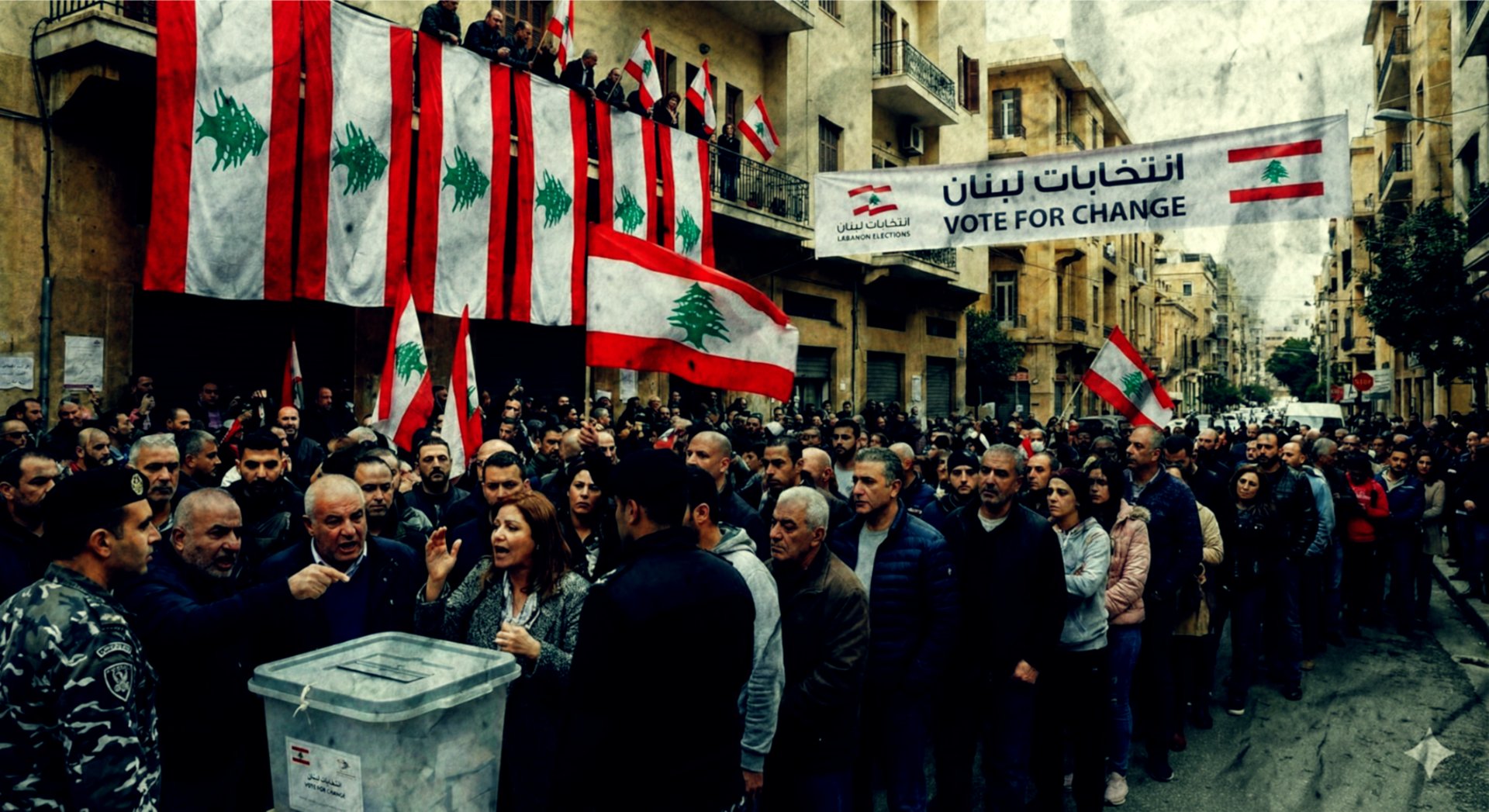
The Lebanese parliamentary elections scheduled for May 2026 mark the most important political event since 2016. The post-2019 crisis period of political stagnation ended when three major events occurred: Hezbollah fought Israel in 2024 and Israel defeated Syria and President Joseph Aoun took office in 2025 and Prime Minister Nawaf Salam formed his reformist government. The combination of these events has brought an end to the extended institutional void which has led to a period of "contested stabilisation."The upcoming 2026 election has evolved into a critical national vote which determines the future direction of Lebanon and its position as an independent nation. The core disagreement between Lebanese factions now focuses on a deeper struggle than their traditional March 8 vs March 14 political divide. The state apparatus has gained international backing to establish its control over violence and governance but faces opposition from the Hezbollah-Amal duopoly which fights to maintain its military power and veto authority in a shrinking strategic space.
The presidential election takes place in a strategic environment where presidential authority has grown but the "Resistance Axis" has lost its core base of support. President Joseph Aoun brought a fresh start to Lebanese politics through his election because he dedicated his presidency to state authority restoration. The Lebanese Armed Forces under President Aoun's operational command now work to eliminate unauthorised military bases in the southern region which directly challenges Hezbollah's core purpose. The state reached its highest level of public support through its decisive actions. The population has united behind the emerging state structure because they want to escape the devastating effects of war and economic collapse and failed leadership. The 2025 polling data shows that 62% of citizens support their national leaders but President Aoun holds the highest approval rating at 81%. The Aoun-Salam alliance presents their electoral power to show that voters must choose between supporting national development or military rule. The 2024 conflict has created the most dangerous situation for Hezbollah since the beginning of the 2000s. The 2024 conflict resulted in Hezbollah losing its military capabilities together with its financial assets. The group lost its main logistical support when its Damascus-based patron regime fell which exposed Hezbollah to complete geographical encirclement and complete political isolation. The organization now focuses on defense instead of expansion because its current situation has become weak. The group maintains its "blocking third" position in parliament because this threshold allows them to prevent essential legislation from becoming law particularly laws that would disarm them. The group opposes a fair electoral system because it understands that such a system would remove its legislative protection which it has maintained since 2005.
The pre-election period has evolved into a critical battle about establishing the fundamental rules which will govern the election process. The established powers led by Parliament Speaker Nabih Berri work together to create new electoral rules because they predict their support base will decrease. The single national district model with proportional representation faces the most opposition among all proposed electoral systems for the upcoming election. The system treats Lebanon as one voting district which benefits parties that maintain strong control over their supporters throughout the country especially the Shia duo of Hezbollah and Amal. The system allows Shia voters to pick candidates from other religious groups for parliament seats which prevents Christian areas from choosing representatives who oppose Hezbollah's platform. All Christian parties across the political spectrum view this proposal as a threat to the National Pact's core principle of preserving sectarian balance. The opposition fights against the current Article 112 of the electoral law which restricts expatriates to only six dedicated seats in a separate voting district. The opposition supports a measure which enables expatriates to vote for all 128 MPs in their home districts because they understand the diaspora population supports anti-establishment candidates. The Resistance Axis maintains its opposition to any changes in the current voting system. The opposition party sees this technical disagreement as an attempt to extend the current parliamentary term because it supports the current power structure which wants to postpone the election.
The political structure of Lebanon undergoes a major transformation because of ongoing electoral battles. The Mar Mikhael Agreement between the Free Patriotic Movement and Hezbollah has reached its final collapse after more than nineteen years of existence. The FPM leader Gebran Bassil publicly declared the end of his party's alliance with Hezbollah which left his organisation without strategic direction and exposed to electoral risks. The FPM lost its ability to win elections through Hezbollah's voter transfer system which used to deliver victory in crucial mixed districts during the 2022 election. The FPM now operates without any alliances because Hezbollah ended their partnership. The party faces two major challenges because its Christian supporters reject its handling of the Aoun presidency and the Lebanese Forces have become its main electoral competitor. The party lost most of its support base according to 2025 municipal election results and student poll data which indicates its parliamentary strength will significantly decrease. The Lebanese Forces under Samir Geagea adopt the FPM's analysis to establish themselves as the primary protectors of state power and Hezbollah resistance. The Lebanese Forces maintain their position as the dominant party which upholds national sovereignty and fights against Hezbollah control in Lebanon. The party has united anti-Hezbollah Christian voters while taking in former FPM supporters and it leads the formation of a broad Sovereignist Front coalition. The coalition unites the Kataeb Party with the Renewal Bloc and independent politicians and Change movement pragmatists to run unified lists against vote fragmentation. The Lebanese Forces party predicts it will win majority control of parliament according to current election projections.
The Sunni political sphere faces a Saudi-backed transformation because Saad Hariri left office. The Grand Mufti Derian leads a new state-building coalition which Riyadh supports through its unofficial direction. The new coalition unites Future Movement survivors with independent reformists and Sunni family members including Faisal Karami from Tripoli who has switched his support from Syria. The Islamist Jamaa al-Islamiyya stands as the only Sunni faction which supports Hezbollah thus finishing the opposition front's cross-sectarian consolidation. The "Change" movement faces a complete loss of its 2022 achievements because the organized opposition has taken control of the movement.
The upcoming electoral results will show the current national political changes through distinct voting patterns. The LF controls North III so strongly that it endangers the political position of Gebran Bassil. The FPM-Hezbollah split in Mount Lebanon III district creates conditions for opposition candidates to win seats that have traditionally belonged to the FPM. The Progressive Socialist Party and LF have formed a strong alliance in Mount Lebanon IV which will eliminate all remaining pro-Syrian supporters. The Shia duo maintains its complete dominance of the 27 reserved seats for Shia voters but its ability to influence other sectors will disappear. The present political situation shows that Lebanon will face its most major political change since its founding as a nation. The Sovereignist Front will achieve a functional majority of 65 or more seats in the upcoming election. The new parliamentary speaker selection and government formation process will be controlled by the Sovereignist Front because they will hold an absolute majority of 65 or more seats. The Resistance Axis will lose its ability to create new laws because its seat numbers will decrease to 40-45 while maintaining its blocking third power to stop legislation. The FPM will lose half of its members to become a small group with minimal power in the upcoming election.
The process toward this outcome faces multiple dangers which could prevent the entire process from continuing. The elections face an uncertain future because of fabricated security threats and administrative obstacles which block the beginning of voting operations. The implementation of the "single district" electoral law faces uncertainty as a potential risk although it seems less probable. A complete suspension of democratic processes will occur when Israel launches a full-scale military attack against Lebanon under emergency powers. The 2026 general election represents the final step in eliminating the political system which controlled Lebanon since 2005. All available data indicates that the 2026 general election will produce a parliament which supports state authority above all else. The fundamental problem continues because no one understands how a parliamentary majority can effectively govern when they encounter intense opposition from the defeated yet influential non-state actor. The 2026 test will determine if political achievements in elections lead to permanent shifts in state authority and national self-governance.