
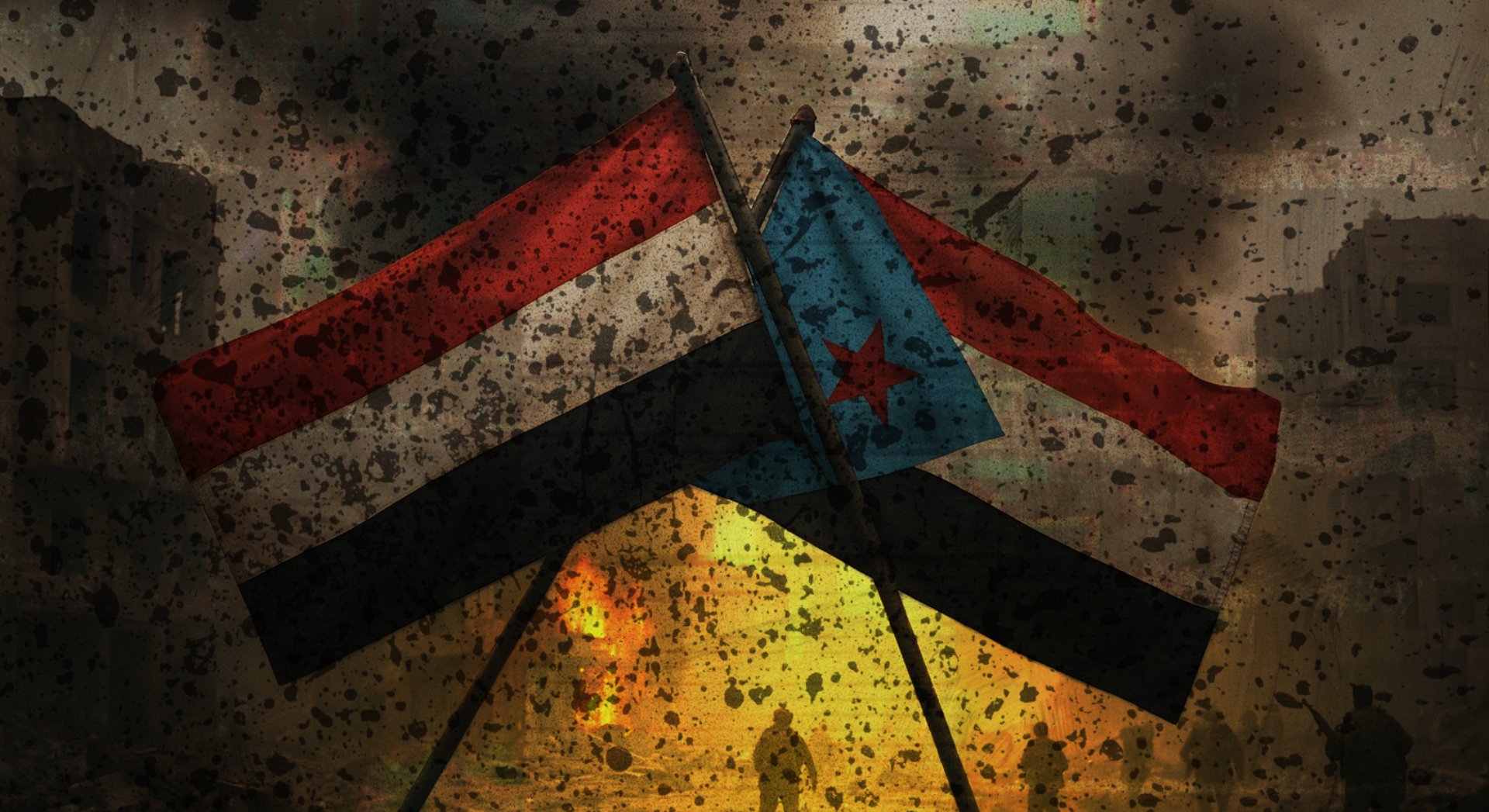
Two Flags, One War
As southern separatists seize oil-rich territories in a shock late-2025 offensive, Yemen effectively splits into rival states, igniting a dangerous new proxy conflict between regional powers.
MIDDLE EASTGEOPOLITICSYEMENUAESAUDI ARABIA
The Yemen situation during December 2025 experienced a significant power distribution change because the Southern Transitional Council (STC) started its campaign for Southern independence. While the northern highlands remain under the firm control of the Houthi rebels (Ansar Allah), the southern landscape has been radically altered by a major STC military offensive in late 2024 and early 2025, effectively fracturing the anti-Houthi coalition. The country now faces a tripartite struggle involving the Houthis in the north, the STC consolidating a de facto state in the south, and the internationally recognized government (IRG) squeezed into shrinking pockets of influence, exacerbating an already catastrophic humanitarian crisis.
The December 2025 Offensive and Southern Consolidation
The UAE-backed Southern Transitional Council initiated "Promising Future" as their decisive military operation to capture the entire resource-rich eastern part of southern Yemen in early December 2025. The STC military forces made quick progress through Hadramout and al-Mahra governorates which have always maintained independence from Aden-based central authority while engaging in intense battles with government forces that remained loyal to the internationally recognized administration. The STC announced on December 9, 2025 that they controlled between 90% and 95% of the former People's Democratic Republic of Yemen (South Yemen) which included all areas along the southern coast and essential oil reserves in Hadramout.
The offensive demonstrates how the unstable system which granted the Presidential Leadership Council (PLC) full control of power completely broke down. Government forces have largely withdrawn northwards or been expelled from key urban centers, including the interim capital of Aden, which is now firmly under STC administration. The First Military Region headquarters in Seiyun became a strategic location which blocked the IRG from using its most important economic resource which was oil export operations. The security architecture now spans a single southern territory which extends from the 1990 unification period until present day thus transforming all future peace negotiations.
The "State of South Arabia" established its own secession goals.
The main reason for this current escalation stems from the STC's official commitment to establish southern independence which they actively work to achieve through their "State of South Arabia" initiative. The STC leadership maintains that the northern union has proven unsuccessful because it has led to Southern people being ignored while their resources are being taken so the southern region needs its own independent state to achieve peace and defense. The "Promising Future" campaign shows itself as a military operation which will result in complete liberation that will end with an official declaration of independence.
The military achievements have received support from political efforts which are currently under development. The STC has mobilised mass demonstrations in Aden and other southern cities to demonstrate popular mandate for secession to the international community. The STC according to analysts has created a situation which will force international recognition of their declaration through a fait accompli approach. The group seeks to establish sovereignty through their control of territory and population and access to resources which would compel regional authorities and United Nations organisations to recognise them as an independent state instead of treating them as a separatist group. This strategy is also a preemptive move to prevent Saudi Arabia from trading away southern interests in any bilateral peace deal with the Houthis.
Regional Geopolitics: The Saudi-UAE Rift
The fragmentation of southern Yemen highlights a widening divergence between the two main backers of the anti-Houthi coalition: Saudi Arabia and the United Arab Emirates (UAE). The STC is heavily supported, funded, and armed by the UAE, which views a friendly, independent southern state as a strategic asset for securing maritime trade routes in the Gulf of Aden and the Bab el-Mandeb strait. The UAE backing of the STC's "Promising Future" campaign has allegedly caused irritation to Saudi Arabia because this country has always backed Yemen unification and the PLC to stop Houthi military growth.
The country of Saudi Arabia experiences a decline in its ability to influence others. The organization focuses on ending its involvement in the conflict by conducting direct negotiations with the Houthis but the STC's self-determined actions create obstacles for these peace negotiations. The Saudis fear that an independent south would leave a hostile, Iranian-aligned Houthi state on their southern border without the counterbalance of a unified Yemen. The ongoing battles in Hadramout province create a risk for Saudi Arabia to return to active combat while the country devotes its resources to Vision 2030 economic development at home.
The Houthi Stranglehold and Humanitarian Fallout
The south experiences division while the Houthi rebels continue to control the northern region of Yemen through their strict authoritarian rule which encompasses Sana'a and the vital port city of Hodeidah. The group continues to leverage its control over the majority of Yemen's population to demand a share of oil revenues—revenues that are now largely in STC hands. The Houthi leadership uses a strategic method to handle the southern conflict because it helps them deal with their most critical military problem. A future partitioned Yemen could lead to Houthi military action against the south which would result in a violent conflict between northern and southern regions of the country.
The humanitarian situation represents the worst humanitarian crisis across the globe because 18.6 million people require assistance. The current conflict has made this situation much worse. The STC-IRG clashes have blocked airspace access which simultaneously interrupted supply routes to prevent essential aid from reaching at-risk communities. The economic warfare between the STC and Houthis has caused oil revenue seizures and goods taxation which resulted in currency devaluation and extreme price inflation that threatens to create famine for millions of people. The Yemen conflict has created a refugee and migrant crisis which leads to detention and mistreatment of people who try to cross through the nation.
Future Outlook: Partition or Prolonged Chaos?
The nation of Yemen faces an essential point in time during late 2025. The international community has established a peace framework through unified government and UN resolutions which now seems to differ from what actually exists in the region. The STC maintains complete authority over southern territories which blocks any chance for restoring the pre-2015 unitary government structure. The upcoming period will most likely see either regional powers negotiating a peaceful "velvet divorce" or the country will enter a dangerous phase of extended multi-group conflict which will establish the "State of South Arabia" as an unofficial yet operational entity fighting against northern forces.
The UN Special Envoy's efforts are now complicated by the need to mediate not just between the government and the Houthis, but between two rival governments in the south and one in the north. The international community needs to understand Yemen exists as two separate nations because any failure to do so will create space for extremist groups to take control and for proxy wars to intensify. The secession process has evolved from its initial stage of planning into its current phase of actual separation which has turned Yemen into a divided territory controlled by military power.